Home
1 Rmarkdown website for easy introduction to R
1.1 Some interesting links:
2 Basics of R
You can do simple operations and assing that to variables
variable_number <- 2+2

variable_number
## [1] 4You could also have vectors which represent lists of numbers or characters. You can create a vector by concatenating values c()
vector_numbers <- c(variable_number, 2, 4, 5)

vector_characters <- c("Reactor", "pH", "TOC", "TN")
When you join them you can generate dataframes, which combine characters, factors and numbers
first_column <- rnorm(30, 3, 0.2)
second_column <- rnorm(30, 8, 1.2)
third_column <- runif(30, 1, 8)
dataframe <- data.frame(first_column, second_column, third_column)
head(dataframe, 5)
We can change the name to the dataframe columns
names(dataframe) <- c("one", "two", "three")
head(dataframe, 5)
Now we could select specific rows or columns by the bracket operator
dataframe[rows, columns]
dataframe[1:4,1:2]we could even plot one against each other
plot(dataframe$one, dataframe$two)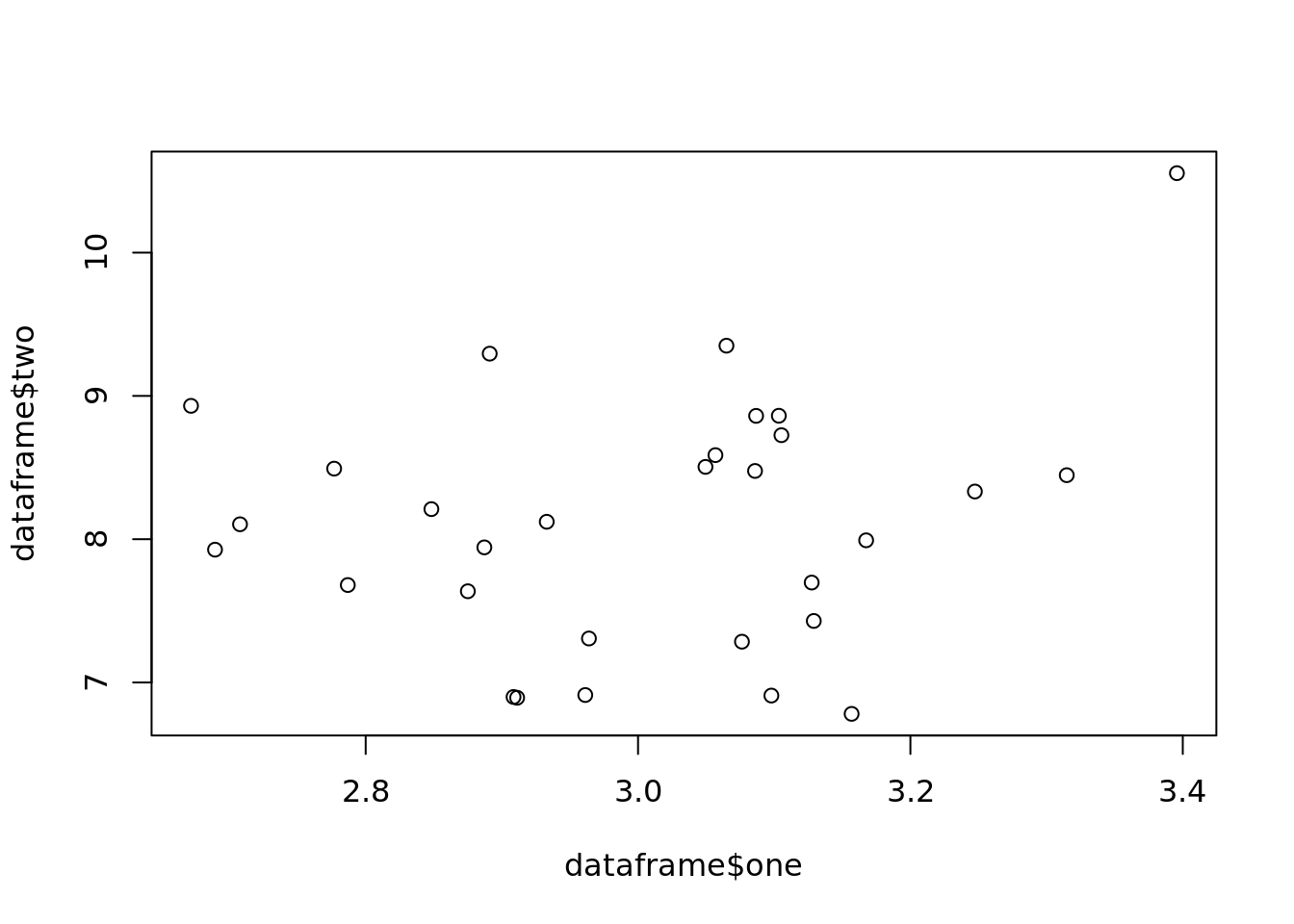
Plots have many possible arguments, for example:
plot(dataframe$one, dataframe$two,
     xlab = "x axis", ylab="y axis", main="A simple plot",
     las =1,
     pch =19, col = "blue")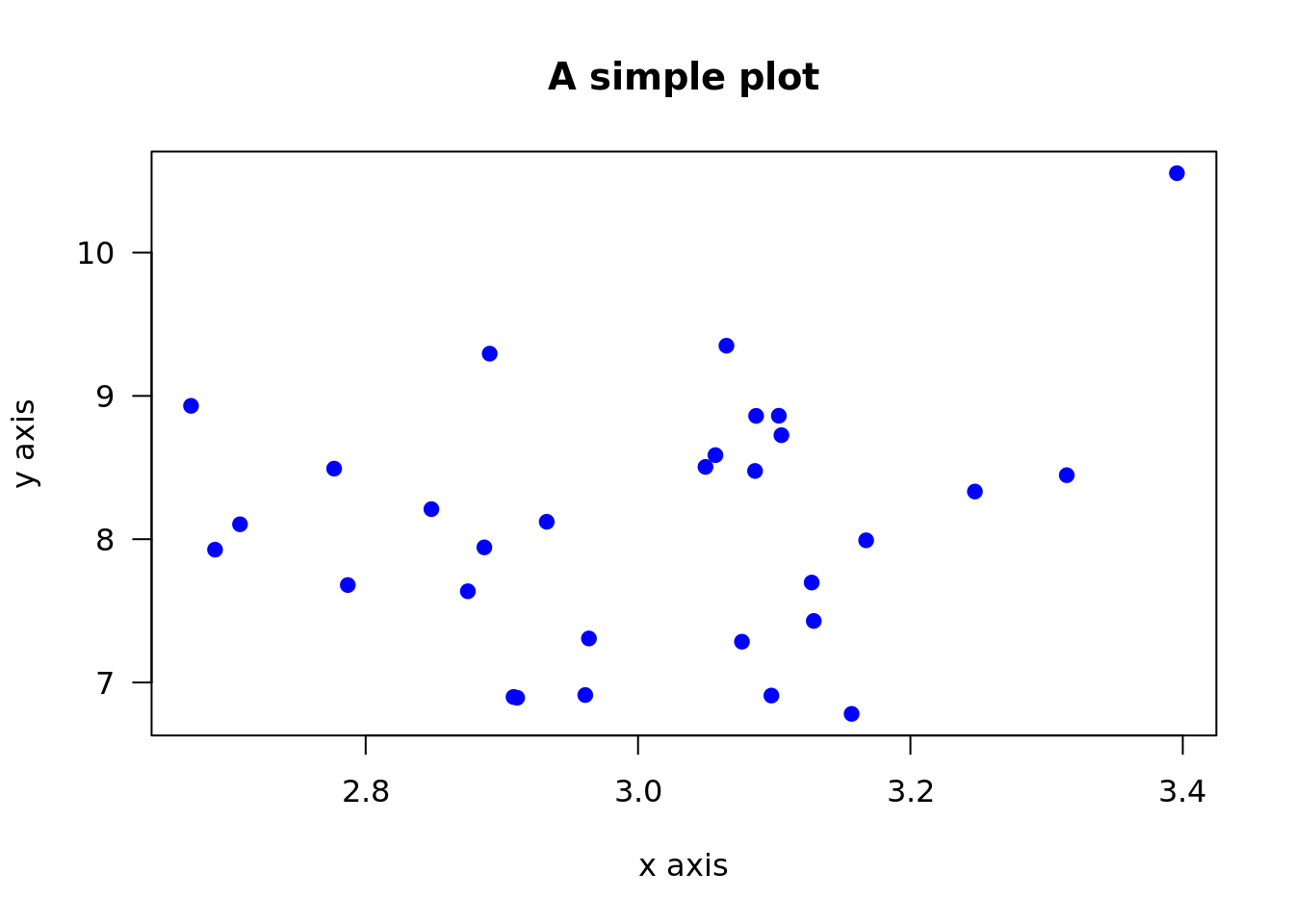
Copyright © 2021 Carlos Sanchez.